
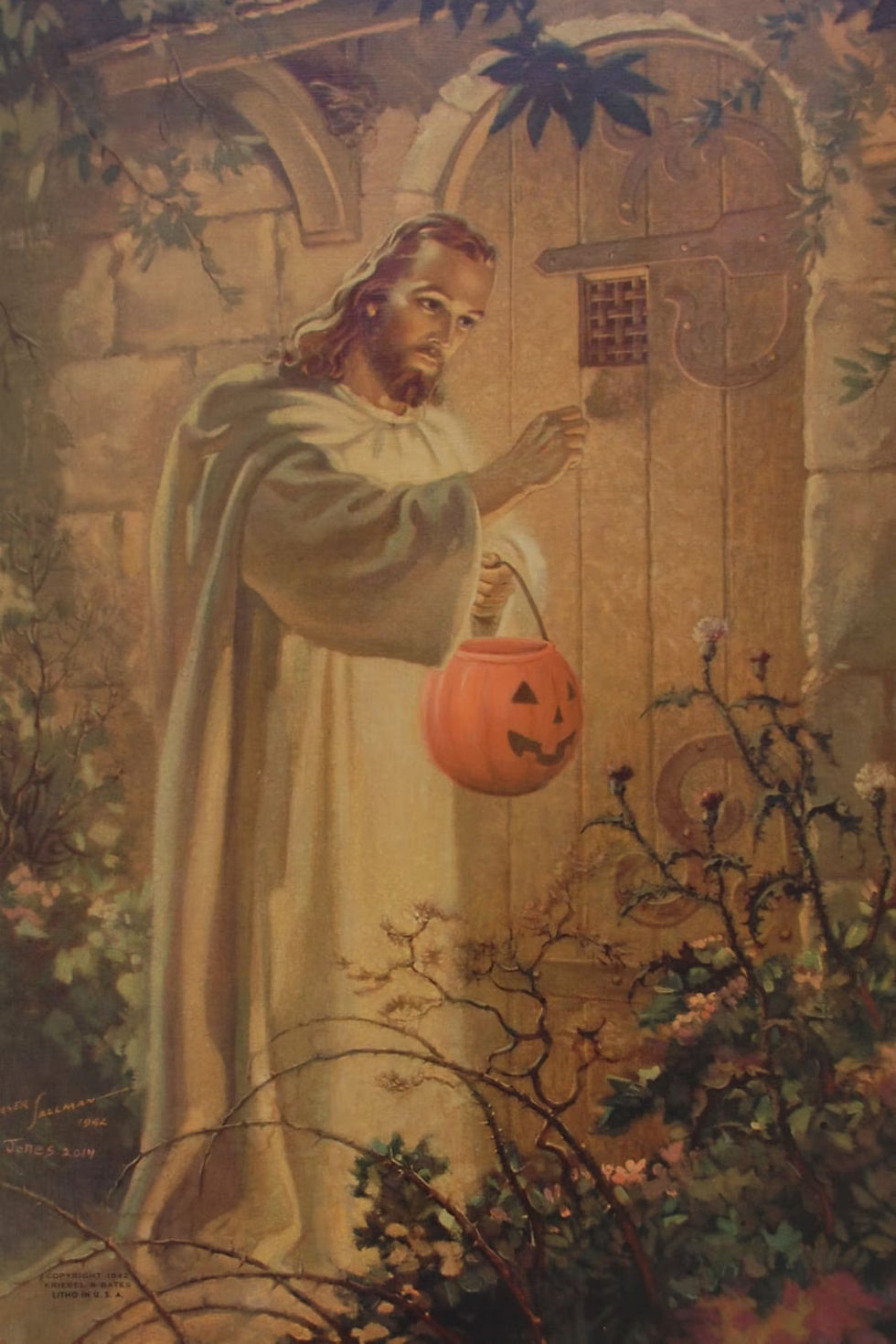
Christ Is Still Lord, even if the world is a dumpster fire.

Well, it’s been a week in the headlines. Literally a dumpster fire of human existence. I’ve been disgusted, angry, exhausted, apathetic…any other adjective that fits here. It created a tension in me. Maybe in you too. Let’s talk about it.
There is a particular exhaustion that comes from living in the overlap of two kingdoms. The kind that keeps you up at night, swirling in thought. Morality means something, doesn’t it? Right is right and wrong is wrong no matter who does it, right? Maybe, unless you have enough money and power…
Every headline feels like a demand. Every time you scroll it carries a weighted expectation. “Pick a side!” “Signal your virtue!” “Declare your enemies!” “Say something now, or be counted among the complicit!” Everything is urgent and everything is framed as ultimate. And in all the noise, the Lordship of Christ is quietly asked to step aside. Perhaps still respected, maybe, but no longer central. My “perhaps” here is sarcastic, by the way. It’s not central at all. And I’m guilty of losing focus.
As always, Scripture knows this world well. Because nothing is new.
The New Testament was written under empire and not a discreet and secret one. Rome did not hide its power. Not in the least. It stamped it on coins, carved it into stone, and nailed dissenters to crosses as public warnings. And yet the apostles are strangely calm about it. Paul can say, without irony, “Our citizenship is in heaven” (Phil. 3:20) while chained under Roman authority. Peter can exhort Christians to honor the emperor (1 Pet. 2:17) while reminding them they are “sojourners and exiles.” You can exist in tension and you must.
This is not naïve positioning. It is theological clarity and the type of clarity that we should lean into during times like these.
Jesus Himself refuses the false choice. “Render unto Caesar what is Caesar’s, and unto God what is God’s” (Matt. 22:21). He neither collapses the kingdoms into one nor pretends Caesar does not exist. He draws a line that cuts through every age: Caesar gets coins and God gets people. Images beared for images beared.
And that distinction is everything and it hasn’t changed, no matter how hard we try to. Our image remains His. And Cesar’s likewise.
The tension we feel today, where politics has become civil religion and identity has become absolute, is not new. What is new is how easily the Church forgets how to live inside that tension without surrendering to it. We are tempted to believe that if we just align correctly, speak loudly enough, or expose thoroughly enough…the world might finally be saved (I’m guilty). Nope, that’s only through Jesus.
But politics, no matter how necessary, cannot bear the weight of salvation. Which again, is only through Jesus.
Augustine saw this. Writing after Rome’s collapse, he warned Christians not to confuse the City of Man with the City of God. Earthly cities rise and fall through pride, violence, and self-love (everything we’re seeing today is not new). The City of God advances quietly; through fidelity, humility, and love of neighbor and enemy alike; and that way of advancement hasn’t changed. When Christians hitch their hope too tightly to the success of a political order, Augustine says, they set themselves up for despair while expecting triumph. It’s the stabbing in the back we’re feeling whatever side you’re on.
And despair often disguises itself as insight. “Ohhhhh I know the truth about this and that.”
This is where identity politics (of every stripe) becomes spiritually dangerous. When a political vision begins to define who is righteous and who is irredeemable, who deserves mercy and who deserves contempt, it has crossed from prudence into a vicious parody of the gospel. It catechizes us in fear and trains us to justify cruelty, even when it feels right…which it might be. All the while slowly replacing the confession “Jesus is Lord” with something far more conditional. Meaning, something or someone in Jesus’ place. Another idol.
The early Christians refused to allow this formation. They prayed for rulers without worshiping them. They obeyed laws without calling the empire holy. They accepted martyrdom rather than let any earthly power claim ultimate allegiance. Tertullian’s sharp question: “What has Athens to do with Jerusalem?” was not a rejection of civic life, but a refusal to let Christ be subordinated to it.
And this brings us to the elephant in the room…the one many feel but are unsure how to name.
The renewed attention on the Epstein files has reopened a deep wound. Not simply because of the crimes themselves, those were already horrific and real, but because of what they reveal about power and protection. We have names and institutions. But the more eerie thing is that we have silence. The unsettling truth that some people live above consequence while the vulnerable absorb the cost.
Scripture does not ask us to be surprised by this. (Should we be surprised Scripture sheath knows?) The prophets of the First Testament assume it.
“The heads give judgment for a bribe… the priests teach for a price” (Micah 3:11). This is not fringe corruption, it is establishment corruption. Corruption that’s normalized and desensitized from the top down. And moments like this rightly awaken anger and grief. Christians should not flinch from that truth. Not at all. We should care fiercely about victims. We should demand justice. We should refuse to baptize prestige or influence. This is our moral and righteous duty. Call things for what they are.
But these moments also test us spiritually.
Because righteous anger can harden into total cynicism. Discernment can slip into suspicion (I’m guilty) and before we realize it, Christ is no longer the center; exposure is. We begin to believe that because some authorities are corrupt, all authority is a sham; because some crimes were hidden, everything must be secretly controlled (and maybe there’s a lot of truth to that); because justice failed here, Christ must not be ruling anywhere. And sure, that posture feels prophetic. But it often ends in paralysis, not faithfulness.
We add fuel to the dumpster fire.
Augustine warned against this too. When Christians expect the City of Man to behave like the City of God, disappointment curdles into despair; or into a desire to burn everything down (again, I’m guilty here too). But the presence of corruption does not negate Christ’s reign. It confirms Scripture’s diagnosis: power reveals the heart. It does not create evil; it exposes it. And what we are seeing is how worldly power has influenced the hearts of many towards hideous evil. Don’t be surprised if a war pops off soon, it’s how power retains power.
Revelation gives us language for this exposure.
Babylon, in John’s vision, is not a secret cabal but a system. A culture of excess, exploitation, and self-protection (sound familiar? It should). She is adorned, admired, intoxicated with luxury, and utterly indifferent to the bodies left in her wake (Rev. 18). Her greatest sin is not that she is hidden, but that she is celebrated without remorse or consequence. Much like what we’re seeing now. Again, nothing new under the sun.
And among the things Babylon traffics in, Revelation is devastatingly explicit: “human souls” (Rev. 18:13). That line should stop us cold in our tracks.
Whenever children are treated as disposable; whether through abuse, exploitation, neglect, or institutional silence; Babylon is at work. It does not require ritual nor does it need secrecy. It simply requires power without accountability and people willing to look away. Or better yet, hide in operation.
Jesus leaves no ambiguity here. “Whoever causes one of these little ones to stumble…” His warning is not metaphorical and it’s not mild. Children are not a secondary concern in the Kingdom of God. They are a theological priority. The way a society treats its children reveals who it truly worships. Abortion, war, abuse, neglect, traumas, and everything else… Christ have mercy on us.
Which means the Church must be especially clear.
We do not protect children because it is politically advantageous. We do not protect children because it earns moral credibility.
We protect children because Christ identifies Himself with the least, the small, the defenseless.
Revelation reminds us that Babylon always falls because she is judged by the Lamb. Holiness is still a thing and Babylon can’t hold the weight. Her collapse comes not through hysteria, but through truth that is embedded in holiness. Not through rage (even though I know it feels good), but with exposure that God Himself brings to light. “Light shown in the darkness and it couldn’t know it.”
And Revelation does not end with Babylon.
It ends with a city where the gates are never shut. A city where violence does not reproduce itself. A city where tears are wiped away. A city made safe, not by power structures we know, but by the reign of the crucified Lamb. And man, that matters for us now.
Because the temptation in moments like this is to let fear disciple us and let outrage replace prayer. It’s too easy to let suspicion replace love and to believe the darkness is total and corruption omnipotent. It’s not. It tries to be, but it is a shadow cowering in the Light.
But (love that word) the cross already tells us everything we need to know about what happens when power protects itself and the innocent suffer. And the resurrection tells us something even more dangerous to cynicism: God is not locked out of history, even when history looks compromised.
Christ is Lord when governments are supposedly just. Christ is Lord when they are obviously corrupt. Christ is Lord when the Church is faithful and when it is not. Simply, Christ is Lord, period.
Which means our calling is not to escape the tension of two kingdoms, but to live it faithfully. To vote, if you choose to, without believing redemption arrives through the ballot. We have the ability to speak truth without dehumanizing and to refuse to let outrage catechize our hearts. Call evil for what it is, but learn to be consistent in that naming.
Gregory of Nyssa called this posture epektasis, or a continual stretching toward God. It keeps us from settling too comfortably into any earthly arrangement. It reminds us that no system gets our soul because Christ has us.
We stand between two kingdoms…not confused about which one wins, rather committed to living now as citizens of the one that cannot be shaken.
Christ does not need to be defended by compromising His character. He needs to be confessed in clarity, with calmness, and faithfully. And not as I repentantly confess, let’s burn this place down.
So the question is not whether Christ reigns, it’s clear that He does.
The question is whether we will live like it is true, even if the world is a dumpster fire. Will we wage war like the Lamb or stoop down to the kingdoms of this world? Either way, the dumpster fire remains. We either extinguish or apply ether.
Maybe we can do a little of both in righteousness and holiness.



Comments